Intoduction
In storytelling, the idea of a protagonist is often central to the narrative, but where does this concept come from? The term has its roots in Greek, derived from prōtos, meaning "first in importance," and agōnistēs, meaning "actor." Together, they form the word Protagonist used to describe the main character or hero of a story.
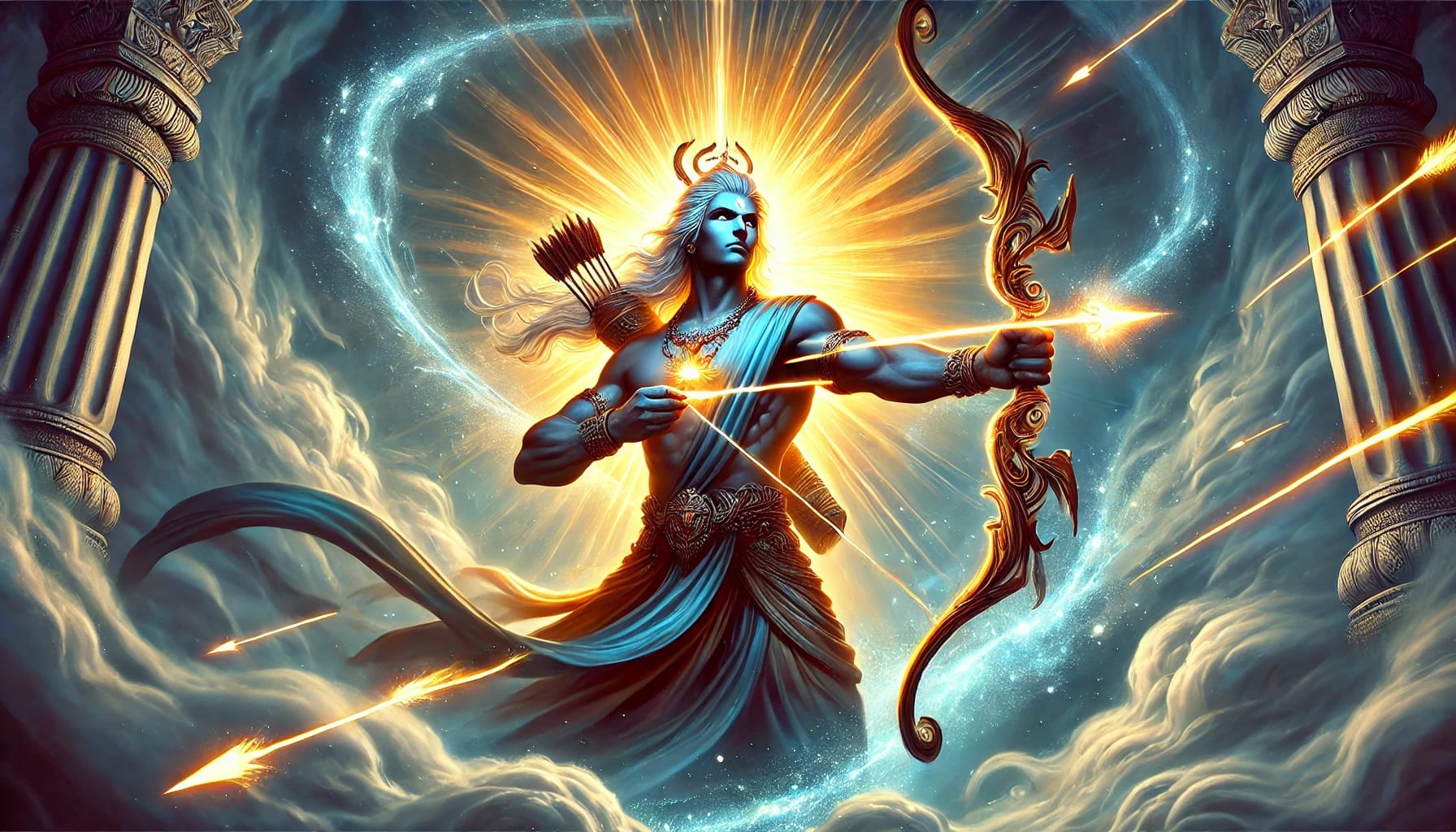
In Sanskrit literature, we use the terms nāyaka for a male hero and nāyikā for a female hero - with similar meanings. Let's explore here the idea of Arjuna being the protagonist of the Mahabharata.
What does a protagonist do?
A protagonist, in classic and contemporary literature, does a few things.
He has a big and scary enemy
He goes on a journey or a voyage
He finds allies along the way
He collects weapons and tools to defeat the enemy
He has moments of extreme self-doubt
He defeats the enemy and defends his people
Arjuna, like all well-written protagonists, checks all these boxes.
In addition to all this, the author says clearly in multiple places that Arjuna is indeed the protagonist of this story. Let's look at two examples from the core Mahabharata, and one from the 80's TV series.
The first shloka of Mahabharata
नारायणं नमस्कृत्य नरं चैव नरोत्तमम्।
देवीं सरस्वतीं चैव* ततो जयमुदीरयेत्।।
nārāyanam namaskrutya naram chaiva narottamam,
devīm sarasvatīm chaiva* tato jayamudīrayet.
jaya must be recited after having bowed in obeisance before nārāyana and also nara, the supreme human being, and also the goddess sarasvati.
The "narāyana" here is krishna, and the "nara" in this shloka is represented by arjuna.
While nara-narāyana are separate legendary sages, it's referenced in multiple places in Mahabharata that Krishna & Arjuna are their embodiment. In this shloka, Krishna and Sarasvati are mentioned for their divine presence. Arjuna is the only mortal making it clear that this designates him as the hero or the main actor.
* This is the version from the BORI Critical Edition In the more popular version of the shloka the word vyasa is used instead of chaiva.
The last shloka of Bhagavad Gita
यत्र योगेश्वर: कृष्णो यत्र पार्थो धनुर्धर:।
तत्र श्रीर्विजयोर्भुतिर्धृवानीतिर्मतिर्मम।।
yatra yogeshvarah krishno yatra pārtho dhanurdharah,
tatra shri-vijayor-bhūtir-dhruvā-nītir-matir-mama.
Where there is the lord of yoga, krishna and where there is arjuna (pārtha) wielding the bow, there fortune and victory are firmly established, this is my belief (says sanjaya)
The intent of this shloka is pretty straightforward. It's not just Krishna, who should single-handedly be enough to bring victory. It's Krishna and Arjuna who together guarantee success.
The title song of BR Chopra's Mahabharat
कथा है पुरुषार्थ की यह स्वार्थ की परमार्थ की,
सारथी जिस के बने श्रीकृष्ण भारत पार्थ की।
kathā hai purushārtha kī ye svārtha kī paramārtha kī,
sārathī jis ke bane shrikrishna bhārata pārtha kī.
This is the story of the purushārthas and greed and the ultimate purpose. The story of bhārata arjuna, whose charioteer was Shri Krishna
Conclusion
There is enough and more proof that Arjuna was written as the main actor in the epic. In spite of all its complexities and meandering way of telling the story, the Mahabharata is primarily the story of Arjuna - a warrior so important that the divine Krishna himself is often recognised as Parthasarathi (Arjuna's charioteer).
With no ambiguity, one can stake and defend the claim that Arjuna is the protagonist of the Mahabharata.