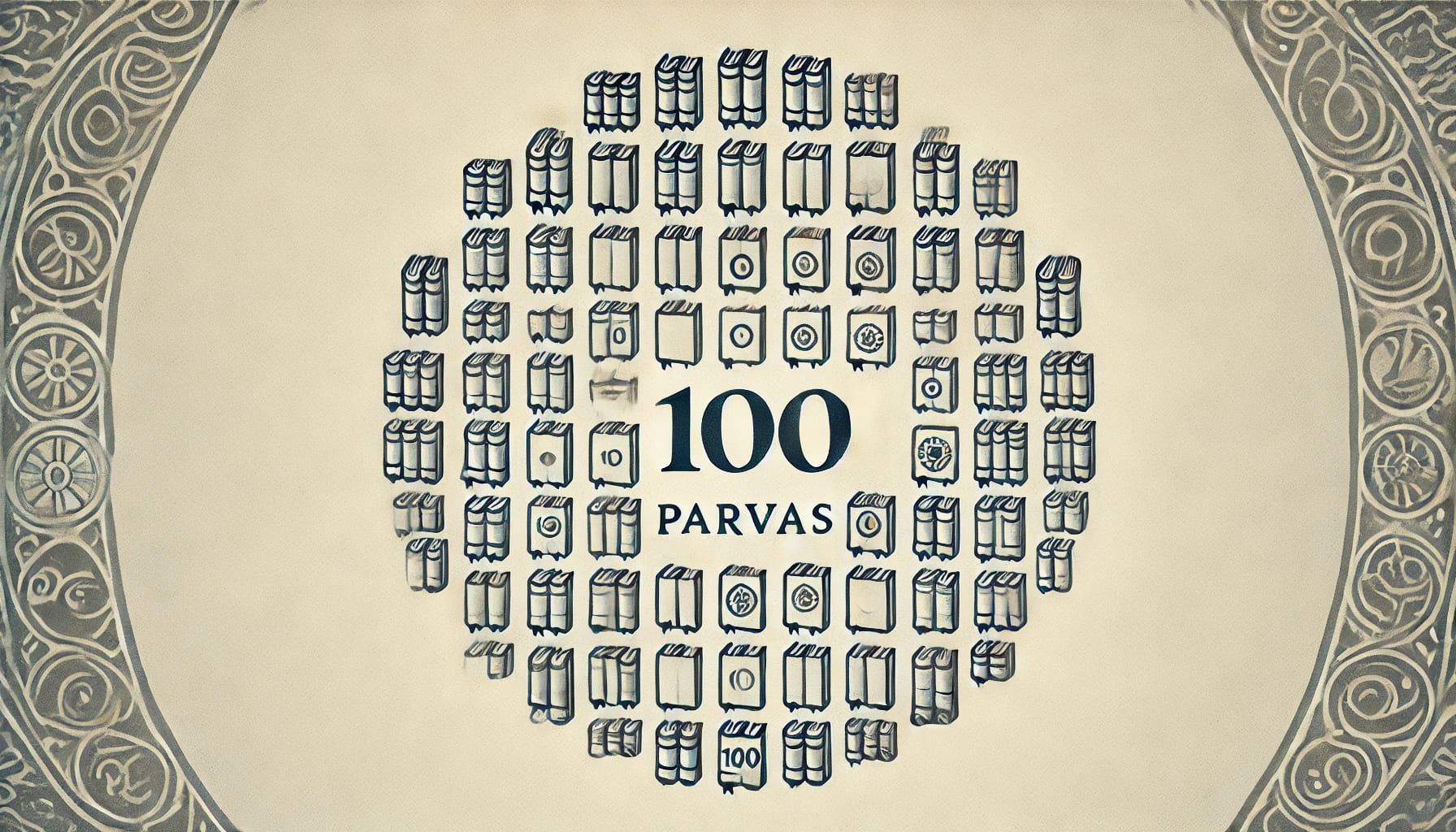
The Mahabharata has two kinds of classifications: a 100-parva classification* and an 18-prava classification
I. ādi parva • 19 sections • 7,205 shlokas
1. anukramanīka parva
210 Shlokas • This parva is a later addition that acts as an index for the epic itself, summarising the main events
2. parvasamgraha parva
243 Shlokas • This is another parva which was added later that describes the epic in the 18 parva and 100 sub parva classifications
3. poushya parva
195 Shlokas • Mostly in prose, this sets up the story behind janamējaya’s snake sacrifice
4. pouloma parva
153 Shlokas • Talking about the lineage of the great sage bhrigu. His wife was puloma making all their descendants poulomas
5. āstīka parva
1,025 Shlokas • About janamējaya’s snake sacrifice, the setting in which the mahābhārata story is told. Named after the sage āstika who saved most of the snakes from the sacrifice
6. ādi-vamshāvatarana parva
257 Shlokas • Talks about incarnations of gods and demons and the story of uparichara vasu and the birth of veda vyāsa
7. sambhava parva
2,394 Shlokas • sambhava means origin. This parva is about the origins of the core story of the epic. It starts with stories of different ancestors of the kurus and ends with the completion of the pāndavas and kouravas education
8. jatugriha-dāha parva
373 Shlokas • This parva is about the burning down of the house of lac
9. hidimba-vadha parva
169 Shlokas • Killing of the demon hidimba
10. baka-vadha parva
206 Shlokas • Killing of the demon baka
11. chaitraratha parva
557 Shlokas • About the stories of the gandharva chaitraratha
12. droupadī-svayamvara parva
263 Shlokas • This parva goes through the events of droupadī’s swayamvara competition
13. vaivāhika parva
155 Shlokas • This covers droupadī’s marriage to all the pāndavas
14. vidurāgamana parva
174 Shlokas • This talks about vidura’s arrival to panchāla after the wedding
15. rājya-lābha parva
50 Shlokas • This short parva is about the acquisition of the kingdom indraprastha
16. arjuna-vanavāsa parva
298 Shlokas • This is about arjuna’s exile to the forest, the reason for it and the things he did while on exile
17. subhadrā-harana parva
57 Shlokas • The abduction of subhadrā
18. harana hārika parva
82 Shlokas • The marriage of subhadrā and the giving of gifts
19. khāndava-dāha parva
322 Shlokas • krishna and arjuna burn down the khāndava forest
II. sabhā parva • 9 sections • 2,387 shlokas
20. sabhā parva
429 Shlokas • sabhā means assembly. This parva takes place in yudhishthira’s assembly and they talk about different assemblies.
21. mantra parva
222 Shlokas • In this context, mantra means ‘process of consultation’. Where yudhishthira consults people about the rājasūya yajna.
22. jarāsandha-vadha parva
195 Shlokas • The killing of jarāsandha
23. digvijaya parva
191 Shlokas • The victory conquest of the pāndavas in all directions
24. rājasūya parva
97 Shlokas • The rājasūya yagna: a royal sacrifice
25. arghābhiharana parva
99 Shlokas • The offering of respect and gifts, and the dispute that followed it
26. shishupāla-vadha parva
191 Shlokas • The killing of shishupāla
27. dyūta parva
734 Shlokas • The game of dice
28. anudyūta parva
232 Shlokas • The aftermath of the game of dice
III. āranyaka parva • 16 sections • 10,239 shlokas
29. āranyaka parva
327 shlokas • This parva is about the pāndavas’ sojourn in the forest. The word vana also means forest and this parva is also sometimes called vana parva
30. kirmīra-vadha parva
75 shlokas • The killing of kirmīra- who was Baka’s brother- by bhīma
31. kairāta parva
1,158 shlokas • shiva disguises himself as a mountain dweller and challenges a meditating arjuna to a fight
32. indralokābhigamana parva
1,157 shlokas • arjuna visits indra’s world
33. tīrtha-yātrā parva
2,422 shlokas • This parva talks about the journey across many pilgrimage destinations and includes many stories of sages, gods and heroes.
34. jatāsura-vadha parva
61 shlokas • yudhishthira, nakula and sahadeva get abducted by a demon jatāsura. bhīma saves them and kills the demon
37. mārkandeya-samāsyā parva
1,656 shlokas • The pāndavas and sage mārkandeya have a long conversation where the sage teaches them about the yugas, kings and stories of gods
38. droupadī-satyabhāmā-samvāda parva
88 shlokas • droupadī and satyabhāmā have a conversation with each other about what makes a good wife
39. ghosha yātrā parva
519 shlokas • kouravas are captured by gandharvas while on an expedition to check on their cows. The pāndavas save the kouravas
40. mriga-svapna-bhaya parva
16 shlokas • A deer appears in yudhishthira’s dreams telling him about their greatest fears
41. vrīhi-drounika parva
117 shlokas • The story of mudgala who lived his life on one vessel of rice per day
42. droupadī-harana parva
1,247 shlokas • The abduction of droupadī by jayadhratha, his defeat and the story of the rāmāyana
43. kundala-aharana parva
294 shlokas • karna’s earrings and armour are taken from him by indra
44. āraneya parva
191 shlokas • yudhishthira answers the questions of a lake yaksha that killed his brothers bringing his brothers back to life as a reward
IV. vairāta parva • 4 sections • 1,736 shlokas
45. vairāta parva
282 shlokas • The pāndavas arrive at virāta in their disguises where they spend the 13th year of their exile
46. kīchaka-vadha parva
353 shlokas • kīchaka was the general of the virāta army and the brother of the queen. He lusts after droupadī and is killed by bhīma for it
47. gou-grahana parva
1,009 shlokas • kouravas attack virāta subsequent to the death of kīchaka. While most of the army fights them other kuru princes seize their cows. arjuna and virāta prince uttara fight them off
48. vaivāhika parva
179 shlokas • pāndavas exile period is over and they reveal themselves. arjuna’s son abhimanyu marries king virāta’s daughter uttarā
V. udyoga parva • 12 sections • 6,001 shlokas
49. udyoga parva
575 shlokas • The preparations for war begin. Both arjuna and duryodhana go to krishna for help
50. sanjaya-yāna parva
311 shlokas • sanjaya is sent as a messenger to the pāndavas. yudhishthira asks for 5 villages
51. prajāgara parva
541 shlokas • dhritharāshtra lays unable to sleep at night as he awaits yudhishthira’s response
52. sanatsujāta parva
121 shlokas • dhritharāshtra asks sage sanatsujāta about death and immortality
53. yāna-sandhi parva
726 shlokas • yāna means journey and sandhi means peace. This parva is about the journey for peace taken by both sanjaya and krishna
54. bhagavat-yāna parva
2,055 shlokas • krishna attempts to negotiate for peace and prevent the war
55. karna-upanivāda parva
351 shlokas • krishna and kuntī both separately reveal to karna the truth of his birth and attempt to get him to the side of the pāndavas
56. abhiniryāna parva
169 shlokas • Both armies march out to Kurukshetra
57. bhīshma-abhishechana parva
122 shlokas • Declaration of bhīshma as the commander of the kourava army
58. ulūka-yāna parva
101 shlokas • duryodhana sends ulūka the son of shakuni to negotiate with the pāndavas
59. ratha-atiratha-samkhya parva
231 shlokas • The counts of the ranks of warriors in each army and the number of soldiers in each rank
60. ambā-upākhyāna parva
755 shlokas • The story of ambā and her rebirth as shikhandi
VI. bhīshma parva • 4 sections • 5,381 shlokas
61. jambūkhanda-vinirmāna parva
378 shlokas • This parva is about the geography of jambūkhanda also known as jambūdvīpa
62. bhūmi parva
87 shlokas • This parva describes the earth
63. bhagavad gītā parva
994 shlokas • This parva contains the conversation between arjuna and krishna that is popularly known as the bhagavad gītā
64. bhīshma vadha parva
3,947 shlokas • This parva describes all the first ten days of the battle in detail and ends with the fall of bhīshma
VII. drona parva • 8 sections • 8,069 shlokas
65. dronābhisheka parva
634 shlokas • In this parva, drona is made the commander of the kourava army and the 11th day of the war is described
66. samshāptaka vadha parva
717 shlokas • samshaptakas are warriors who have taken an oath. These warriors take an oath to either kill arjuna or to die. It also describes the 12th day of the war
67. abhimanyu-vadha parva
643 shlokas • This parva covers the 13th day of the war. The formation of the chakravyūha and the death of abhimanyu
68. pratijnā parva
365 shlokas • arjuna takes a vow to kill jayadratha before the following sunset or die if he fails
69. jayadratha-vadha parva
2,914 shlokas • The description of the 14th day of the war which revolved around the killing of jayadratha
70. ghatotkacha-vadha parva
1,642 shlokas • After the killing of jayadratha, the battle continued into the night where the son of bhīma, ghatotkacha, was more powerful as a rākshasa. He had to be killed by karna
71. drona-vadha parva
692 shlokas • The 15th day of war and the killing of drona
72. nārāyana astra moksha parva
538 shlokas • drona’s son ashvathāmā is furious at the death of his father and releases the nārāyana astra on the pāndava army. The army is only saved because they heeded krishna’s advice to lay down their weapons so the astra wouldn’t harm them
VIII. karna parva • 1 section • 3,870 shlokas
73. karna vadha parva
3,870 shlokas • After drona’s death, karna is made the kourava commander. He was the commander for the 16th and 17th day of the war. The 17th day is the day that bhīma kills dushasana and drinks his blood and finally, arjuna kills karna
IX. shālya parva • 4 sections • 3,315 shlokas
74. shalya-vadha parva
844 shlokas • shalya is appointed as the next kourava commander. He was commander for only the 18th day. He was killed by yudhishthira
75. hrada-pravesha parva
664 shlokas • bhīma kills the rest of duryodhana’s brothers. sahadeva kills shakuni and duryodhana hides in a lake
76. tīrtha yātrā parva
1,261 shlokas • duryodhana is found. bhīma and duryodhana prepare to fight. balarāma returns from his pilgrimage. His pilgrimage is also described
77. gadā yuddha parva
546 shlokas • The club fight between bhīma and duryodhana culminating in bhīma illegally breaking duryodhana’s thigh
X. souptika parva • 2 sections • 771 shlokas
78. souptika parva
515 shlokas • On the 18th night, ashvathāmā kills all the surviving pāndava soldiers including all of droupadī’s children and brothers. duryodhana is informed of this and then dies
79. aishīka parva
257 shlokas • The pāndavas pursue ashvathāmā in revenge. Both ashvathāmā and arjuna release their bramhastras. arjuna withdraws his but ashvathāmā redirects his to the wombs of pāndava women. krishna saves parīkshit in uttarā’s womb
XI. strī parva • 4 sections • 713 shlokas
80. vishoka parva
194 shlokas • vishoka means end of sorrow. It is about vidurā’s attempt to dispel dhritarashtra’s sorrow
81. strī parva
468 shlokas • The women mourn. dhritharashtra attempts to kill bhīma. gāndhāri curses krishna
82. shrāddha parva
44 shlokas • Funerals are performed
83. jala-pradānika parva
24 shlokas • After the cremation, this parva is named after the observation of water-rites and the offering of water to the dead warriors. kuntī also tells the pāndavas that karna was their elder brother.
XII. shānti parva • 3 sections • 13,006 shlokas
84. rāja-dharma parva
4,506 shlokas • yudhishthira mourns karna being kuntī’s son. He wishes to abandon the throne but is dissuaded. He learns the dharma of a king from bhīshma
85. āpad dharma parva
1,560 shlokas • bhīshma teaches yudhishthira about the dharma that is followed in times of calamity
86. moksha dharma parva
6,935 shlokas • moksha means liberation. Liberation from the cycle of life and death, of dharma, artha and kama. This parva is about the attainment of moksha
XIII. anushāsana parva • 2 sections • 6,493 shlokas
87. dāna dharma parva
6,409 shlokas • The instruction bhīshma is giving yudhishthira continues as he teaches about the dharma to be followed while giving charity
88. bhīshma-svargārohana parva
84 shlokas • This parva is about bhīshma’s death and ascent to heaven
XIV. ashvamedhika parva • 1 section • 2,743 shlokas
89. ashvamedhika parva
2,743 shlokas • This parva is about the ashvamedha yagna- the horse sacrifice. The preparations for the yagna and the yagna itself. parīkshit is born. arjuna meets his son babruvāhana. A mongoose visits the celebrations.
XV. āshramavāsika parva • 3 sections • 1,061 shlokas
90. āshramavāsa parva
737 shlokas • dhritarashtra, gāndhāri, sanjaya, vidurā and kuntī leave for the forest to spend the last days of their lives in meditation. vidurā dies and merges into yudhishthira.
91. putra darshana parva
234 shlokas • yudhishthira wishes to stay in the forest with the elders. vyāsa uses his divine vision to show the deaths of the sons of the kuru family and explains the importance of yudhishthira’s return to hastinapura. He then returns
92. nāradāgamana parva
91 shlokas • nāradā arrives in hastināpura to inform the pāndavas of the death of the elders
XVI. mousala parva • 1 section • 273 shlokas
93. mousala parva
273 shlokas • The yādavas kill each other in accordance to an old curse. krishna and balarāma give up their lives. arjuna loses his powers.
XVII. mahāprasthānika parva • 1 section • 106 shlokas
94. mahāprasthānika parva
106 shlokas • This parva describes the great journey the pāndavas and droupadī take into the after-life. There is a loyal dog that follows them all the way.
XVIII. svargārohana parva • 1 section • 194 shlokas
95. svargārohana parva
194 shlokas • yudhishthira reaches heaven with his human body. He is tested by being shown hell before being allowed to go to heaven. The dog was his father yama all along.
XIX. harivamsha • 3 sections • 6053 shlokas
(harivamsha is sometimes referred to as the 19th parva. It is an appendix to the Mahabharata. Some stories about krishna, which are not part of the Mahabharata, are to be found here.)
96. harivamsha-parva
2,442 shlokas • The stories of vishnu and his many avatāras
97. vishnu parva
3,426 shlokas • The story of the life of krishna
98. bhavishya parva
205 shlokas • The narration finally returns to janamejaya and vaishampāyana. The snake sacrifice is stopped and the importance of the story of his ancestors is understood by janamejaya
* Note: It's called a 100-parva classification, but it really contains 95 parvas if we count only Mahabharata. Even after counting Harivamsha, it still reaches 98 parvas.